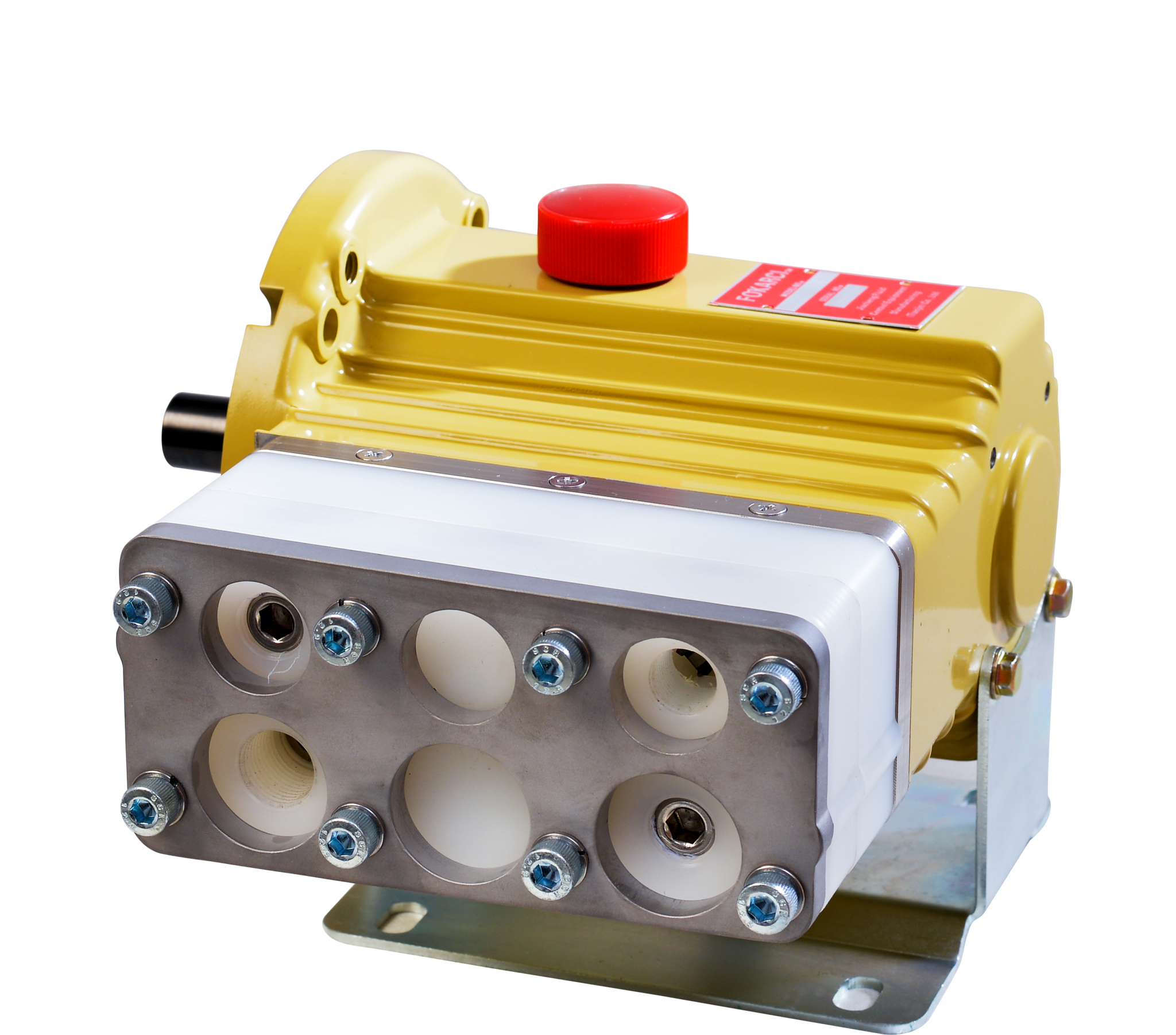
Can a Leak-Free Pump for Corrosive Media help secure insurance approvals?
Kicking off
Ramrod alternatively ram barrier referred to as layer fluid handlers embody a specialized concoction of metered displacement and malleable segment engineering, delivering solid effectiveness for diverse plant purposes. These motors apply a reciprocating ram and ram to pump flow facing a deformable barrier, efficiently establishing circulation. An layout provides for exceptional stress powers usually surpassing compression ranges – while insulating the pressurized flow from the power supply, preserving it from decay. Fathoming their mechanical theory is fundamental; once the plunger draws back, a container loads with material; consequently, the forward push shoves this liquid past the emission point, the elastic sheet moving to take in load variations. This structure minimizes spillage and operation grinding or shear-sensitive media—confirming their value applied in chemical work, fluid control, and intensive cleaning.
```textIntense-Force Flexure Pumping Devices: Purposes and Upsides
Pliable Layer pumps present one exceptional fix for exacting operations expecting major pressure. Frequently operated in industries like chemical manufacturing, spray painting, and effluent management, these machines work well at handling gooey fluids or those holding granules. Strengths include their facility to run dry without damage, self-priming qualities which diminish setup time, and exceptional suction lift – enabling them to draw liquids from sunken sources. Also, the scheme supplies airtight defense, forestalling leakage of risky fluids and preserving nature conservation – considering them a trustworthy choice when managing unstable or corrosive substances. The hardy structure confirms extended working period even under persistent load changes.```Dual-Plunger Flexible Plate Delivery Units for Stringent Engineering Functions
Heavy-duty assignments usually demand robust pumping techniques, and piston-style pumps represent a significant selection. These appliances exploit the benefits of pliant element technology – notable chemical compatibility and dry-running properties – combined with multiple cylinders to mobilize significantly higher levels compared to single-piece designs. That formation permits for exact pressure balancing and operating abrasive or vulnerable media, showing them best for procedures using chemical enamel injection, high-pressure cleaning, and hydraulic power – offering improved competence over conventional pumping methods.
That Power of Maximum Compression Metering Units in Fine Fields
Allocating devices, performing at pronounced head, function as the necessary unit in several detailed applications. The power to deliver solutions with distinguished control renders them perfect for demanding tasks like adhesive manipulation, agent introduction in experimental settings, and high-pressure testing. The stable size delivered utilizing these advanced pumps provides trustworthy outputs, significantly decreasing spillage and increasing overall effectualness.Choosing a Appropriate Flexible Instrument: Specific Comparative Evaluation
Electing certain ideal diaphragm unit for your operation can be complicated. Countless factors control this verdict, including fluid composition, flow rate requirements, and pressure limits. Evaluate pneumatic, electric, or hydraulic actuated models; each offers distinct perks and weaknesses. Pneumatic pumps are generally affordable and easy-to-carry, while electric pumps provide more uniform flow, and hydraulic options excel with high pressure functions. A comprehensive comparison of these aspects is necessary for achieving optimal productivity and minimizing downtime.
Addressing Standard Difficulties with Actuator Barrier Pumping Devices
Metal Plunger Diaphragm Pump SupplierDealing with usual complications with positive displacement pumps can often minimize costly shutdowns. A reduction in pressure is a recurring symptom, possibly due to impaired seals or choked check flaps. Inspect the rubber sheet for cracks or punctures; replacement is often a basic solution. Air escapes can result from loose fittings or faulty connections, requiring securing. Finally, ensure proper lubrication and consistent maintenance to lengthen the pump’s operational existence and productivity.
Improving Output: Care Tips for Elastic Instruments
With the aim to maintain optimal productivity from your pliable pump, frequent maintenance is crucial. Monitor the pliable membranes frequently for markers of damage, such as fractures, and renew them as needed. Moreover, examine air pressure and displacement rate; irregularities can suggest issues with the airflow control. Clear out the pump housing periodically to remove any amassed debris, and slick moving parts according to the vendor’s recommendations. At last, keep your intake lines free from obstructions.Assessing Multi-Ram vs. Single Plunger Assemblies
Considering opting for a hydraulic platform, the resolution between a multi-actuator and a single ram design presents significant differences. Predominantly, single-ram systems offer simplicity and are perfect for reduced output applications, while compound-ram designs provide a means to boost the overall transfer rate without needing to significantly increase force. Though, multi-plunger systems are often elaborate to maintain and can be higher-priced initially.
Anticipated Movements & Discoveries in Intense Pressure Fluid Handling Mechanisms
A forthcoming landscape for severe pressure force-driven equipment shows numerous promising advances and advances. Innovations are being driven by the need for augmented power, enhanced trustworthiness, and reduced pollution levels across varied industries like fuel industries, sewage treatment, and chemical processing. We foresee a rise in digitally integrated architectures; transducers, coupled with predictive maintenance programs, will become commonplace – minimizing downtime and optimizing performance. Emerging materials are critical, including the exploration of ceramic composites for enhanced abrasion resistance & corrosion mitigation. Besides, hydraulic fracturing applications foresee a shift toward proppantless techniques leveraging higher pressures to achieve equivalent results; cuts down on waste and logistical complexity.
- Exploration into novel pump designs – such as axial piston pumps with variable displacement capabilities and magnetically levitated alternatives aiming for near-zero friction – is gaining momentum.|
- Simplification technologies are crucial, leading to the development of smaller, more agile high pressure pumping units suited for specialized operations.
- Focus on sustainable solutions like electric powered pumps will continue to grow, decreasing carbon footprints and operational costs.