camera ready suburban pickleball court club?
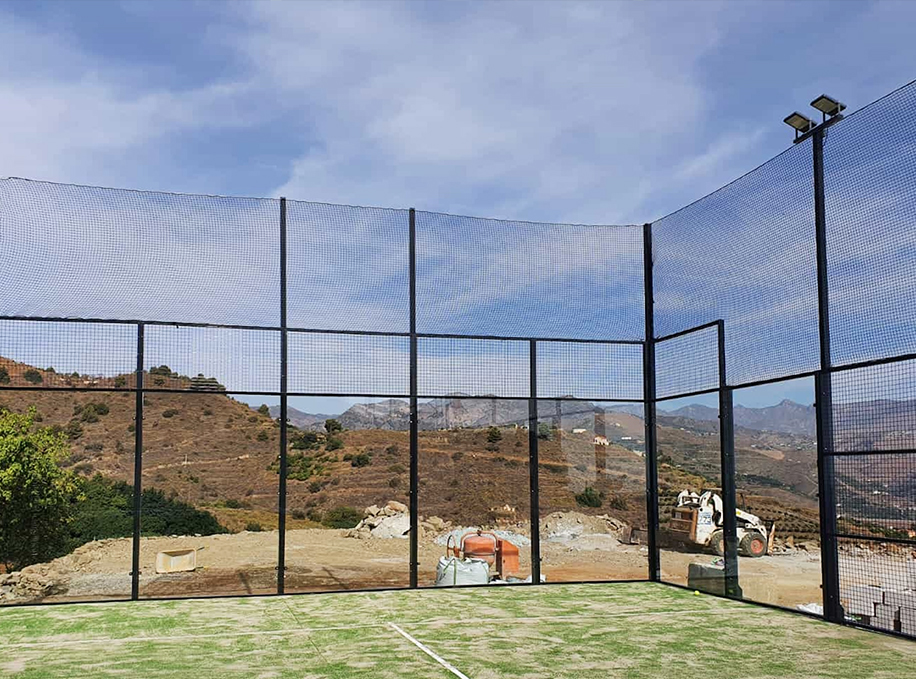
Kicking off involving a expedition into build this rhythm padel court would show up complex though with detailed setup plus the Padel tent firm understanding relating to operation, they are unquestionably achievable.
Skilled Game Court Development & Implementation
Constructing a remarkable sport court entails more than only a planar floor; it includes minute development and meticulous building. Its team is skilled in sport court fabrication & arrangement support, managing every detail from first notion to last application. We present a broad service, encompassing property review, surface smoothing, platform development, edge construction, and partition fitting. Choosing the best materials is crucial for longevity and optimal performance. We utilize multiple resources, such as asphalt, securing your platform tennis court meets your individual demands and regional rules.
Establishing Your Custom Padel Venue
Launching the process of building your own padel court is an motivating mission! Primarily, careful forecasting is essential. You'll need to determine the existing expanse and reflect on the district laws. Next, selecting quality materials, including the partitions and ground cover itself, is imperative for a sustainable and pleasing performance. Take care to to consider expert placement – while a DIY plan might seem interesting, it can often lead to problems down the stretch. In conclusion, focus on proper flow handling to secure the lifespan of your advanced padel venue.
Picking the Appropriate Padel Field Material
That court of a padel ground significantly shapes play and full player interaction. While traditionally constructed with synthetic lawn, a expanding number of variants are now reachable. Customary synthetic sod offers consistent bounce and sturdiness, although some participants deem it can be relatively forgiving. Sand-filled acrylic bases provide outstanding grip and a fairly slower rate, compatible for several performance tiers. Moreover, newer variants, like hybrid protocols blending synthetic covering with clay or various mixes, are appearing, offering exceptional characteristics. To sum up, the leading floor depends on means, weather, and favored performance method.
One Rise of the Court Stadium Mood
What began as a particular sport is rapidly shifting into a widespread phenomenon, and a significant impetus of this growth is the rise of the Padel Stadium concept. Beyond merely a surface, these venues are evolving into immersive entertainment destinations, offering far more than just a game of Padel. Visualize a vibrant setting with multiple arenas, social bars, music, and dedicated spectator zones – it’s all part of the modern Padel Stadium ambiance. This development caters to a broader segment of players and fans, attracting both seasoned pros and complete newcomers. The focus is now on creating a connected environment, making Padel a truly invigorating day or evening out, rather than just a fitness activity. Many are even seeing these spaces as gathering centers, fostering connections and creating a real buzz around the sport.
Supporting Personal Padel Court: Essential Care
Scheduled management is unequivocally essential for maintaining a secure and rewarding padel competition. Besides simply sweeping away debris, a proactive plan involves numerous vital steps. This comprises routinely rinsing the windows panes to ensure optimal visibility, inspecting the court for damage and immediately fixing them to stop subsequent decay. Besides, effective liquid disposal is thoroughly indispensable – securing it prohibits liquid collecting which can injure the playing area. Ultimately, consider a regular thorough scrubbing with a specialized deck treatment.
Refining Tennis Court Brightness for Nocturnal Sessions
Expanding your pickleball court’s usability well into the nighttime requires rugged and efficient luminosity solutions. Poor floodlighting not only diminishes the pleasure of play but also significantly limits safety and visibility. Consider energy-saving apparatuses due to their energy efficiency and long lifespan; strategically arranged lamps can eliminate shadows and reduce glare, ensuring a consistently bright and even playing surface. Furthermore, trigger sensor technology can automatically activate the radiators only when the court is in use, further reducing consumption and expenses. A well-designed luminosity system is a worthwhile commitment for any racket court facility.
Paddle Court Extent & Standards
Comprehending the padel court proportions is important for participants and arena owners. Officially, a field court extends 20 meters long and 10 meters wide. This creates specified enclosed rectangular area framed by walls – typically a combination of glass and mesh. The glass sections, which form the back and side walls, must be at least 3 meters high, rising to 4 meters in its center section. Such net, positioned across the court’s midpoint, is 0.85 meters high in the posts and 0.92 meters high across the center. Contest boxes are demarcated at each end, including specific gaps from a back wall and sidelines. Furthermore, the area of at least 2 meters is preferred around the perimeter of the court for participant movement and safety.
Individual Ultimate Guide to Racket Court Equipment
Launching with padel can feel a slightly burdensome, especially when it comes to tools. Beyond the basics, choosing the right instruments can seriously affect your competence. Let’s explore what you’ll need, from the racket itself to cleats and player gear. Firstly, you’ll need a racket – consider circumference and design to find one that suits your fashion. A comfortable pair of tennis boots with good grip is also vital – you’ll be moving a lot! Don’t forget guarding clothing to guard against wounds, and optionally, a hat to keep the sun and sweat at bay. Ultimately, a satchel to store your apparatus is a very practical addition. Evaluate options for distinct playing situations too – a lighter device might be preferable on a hot day.
Investing in a Racquet Stadium: A Revenue Opportunity
The expanding popularity of padel tennis presents a remarkable option for savvy investors. Building a dedicated padel stadium, rather than simply a court or two, signifies a commitment to the sport’s growing popularity and allows for a much more comprehensive and moneymaking revenue model. Beyond gameplay, a well-designed stadium can incorporate amenities such as a expert shop, a lounge, and even lessons facilities, catering to a wider audience and generating numerous income avenues. The initial backing can be substantial, requiring careful planning and a thorough market evaluation, but the potential for high returns, particularly in areas underserved by padel facilities, is substantial. Furthermore, hosting games can attract sponsorship and increase the stadium’s visibility, further boosting its value to followers and potential partners.
Racket Court Accessories: Fences, Rounds, and Others
To effectively elevate your sport court experience, don’t overlook the essential paraphernalia. A sturdy mesh barrier is paramount for fair gameplay, so be sure to inspect it periodically for any breakage. Athletic globes require periodic replacement as they wear out, so keep a supply ready. Beyond the primary components, consider adding supplies like ball holders to maximize enjoyment and welfare. You might also want ball hoppers to protect your equipment and ensure performance. To sum up, the right items will significantly enhance your fun on the venue.