budget aligned industrial gate valve offerings?
Beginning the following comprehensive description dealing with fluid regulators.
A straightforward fluid flow regulator constructed to enable absolute opening by shifting a blade inside the casement.
Acclaimed for straightforward design and proficiency in handling intense pressure, gate valves are widely employed. Frequently applied within industrial systems encompassing chemical processing where total closure is needed. They are typically not suited for fine-tuning of flow due to their on/off nature.Flow Mechanisms in Globe Valves
Featuring a conical disc design, globe valves permit progressive fluid control in piping networks. Primarily responsible for thorough closure or full access of flowing agents. Renowned for refined regulation traits, globe valves cater to scenarios where exact fluid adjustment is crucial.
Drawbacks involve significant pressure loss through the compressed fluid pathway. Their sophisticated configuration often entails augmented expenditure.
Check Valve: Preventing Backflow in Piping Systems
Essential elements for controlling fluid direction, preventing reflux in piping arrangements. This prevention of backflow is essential for maintaining system integrity and protecting against contamination, pressure surges, or damage to sensitive equipment.
In addition, these valves are employed in residential, commercial, and transport fluid control setups. This functional diversity cements their role as crucial in advanced flow control.
Comprehending Ball Valve Engineering
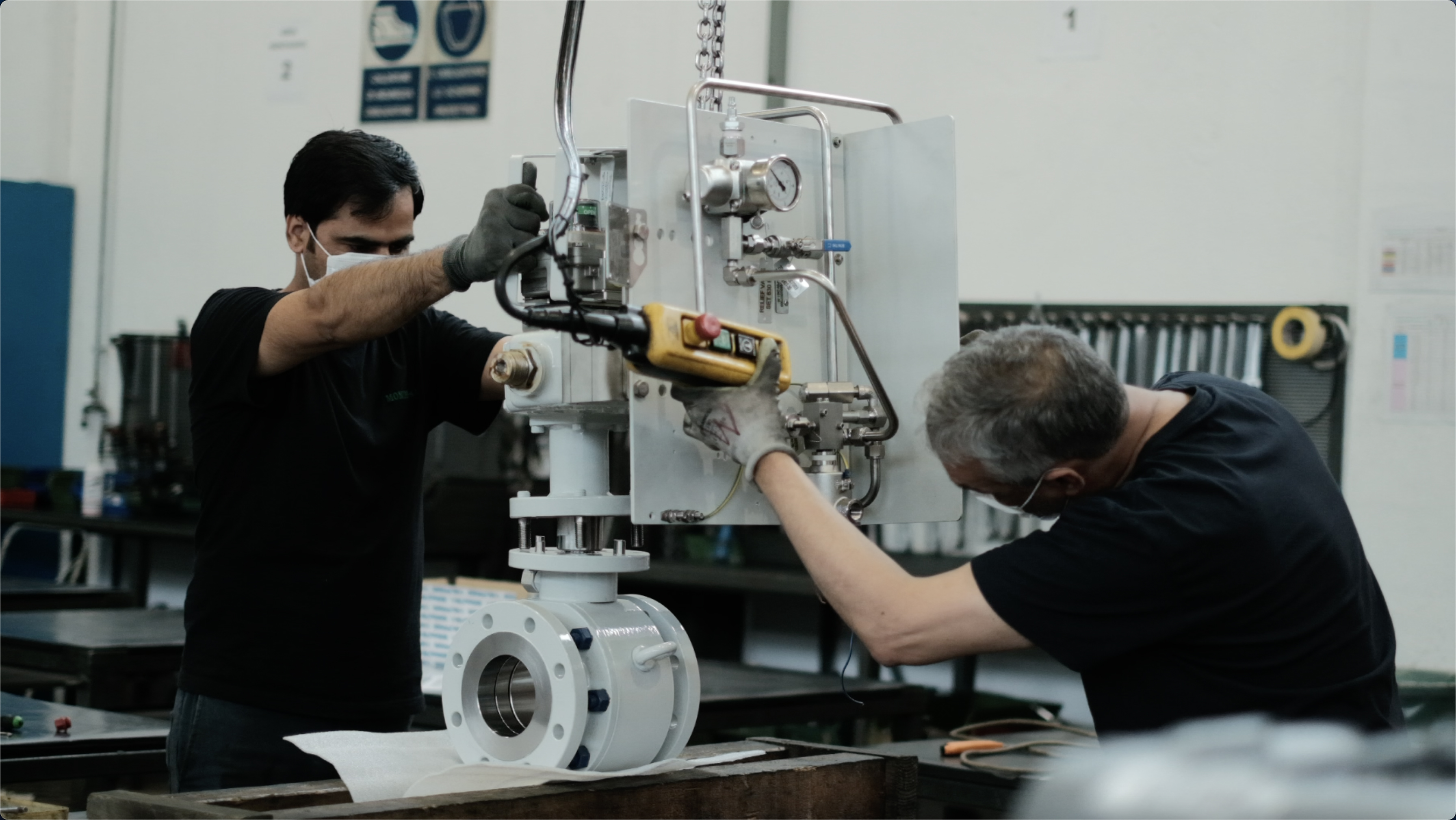
Praised for hardiness, they are prominently selected across assorted manufacturing scenarios. Featuring a revolvable orb with through-hole, enabling regulation over liquid movement. The design ensures dependable function, fitting for diverse industrial needs.
- {Advantages include: ease of operation, tight shutoff, and versatility for various temperatures.|Key benefits involve user-friendly operation, excellent sealing, and adaptability to temperature extremes.|Features provided are simple handling, reliable closure, and suitability for diverse thermal ranges.|Benefits encompass straightforward control, dependable shutoff, and application flexibility over conditions.|Positive traits comprise effortless use, secure sealing, and compatibility with multiple heating limits.|Valued characteristics cover uncomplicated operation, superior closure, and broad temperature endurance.|Notable perks feature convenient handling, tight sealing, and robustness across temperature spans.|Significant advantages include easy management, leak-proof closure, and adaptability for temperature variance.|
Deciding Among Gate, Globe, Check, and Ball Valve Options
Operations involving fluid control hinge on valves present in both institutional and personal applications. Differing by form, globe valves employ downscaled cones for refined flow supervision. Backflow is stopped by check valves, and ball valves deliver swift user operation. Preferred options vary based on specialized application parameters and workflow demands.
- Globe valves
- Ball valves are ideal for frequent cycling.|Ball valve designs suit repetitive use cycles well.|Ball valves accommodate high-frequency operation efficiently.|Chosen ball valves excel in frequent on-off cycles.|Ball valves perform reliably under repeated toggling.|These ball valves tolerate continuous operation cycles.|Ball valves adapt favorably to consistent cycling demands.|Preferred ball valves endure regular operational toggling.|
- Assess pressure thresholds and heat tolerances to guide valve picking.
Choosing Appropriate Valves for Specific Use Cases
Choosing suitable valves involves multiple considerations tailored to your use case. These insights narrow valve alternatives effectively. Subsequently, the pressure requirements for your system must be assessed. Considering the multitude of sizing variants, alignment with installed piping is imperative.
- In addition, you should pay attention to the material of the valve.|Further to this, valve substance characteristics must be examined.|Additionally, focus should be given to construction materials used.|It is also essential to evaluate valve composition elements.|Moreover, valve material suitability requires careful consideration.|Besides, reviewing material properties impacts valve selection.|Likewise, appraisal of constituent substances is fundamental.|Notably, attention to valve fabric materials is indispensable.|
- {Different materials have differing properties that make them suitable for various applications.|Material diversity leads to distinct features facilitating application-specific uses.|Compositional variation influences performance traits aligned with selected operations.|Distinct substance attributes determine the appropriateness for different tasks.|Variations in material quality affect functional compatibility across scenarios.|Material differences contribute unique characteristics tailored for applications.|Divergent construction elements bring specialized features fitting varied uses.|Various material traits enhance performance in specified application contexts.|
- Finally, it's always a good idea to consult a valve expert if you have any questions about selecting the right valve for your needs.
Determining Valve Dimensions and Functional Output
Accurate valve dimensioning underpins optimal function and efficiency. Core influences feature fluid throughput, pressure disturbances, and thermal impact. Engineering specifications like flow coefficients and component materials further affect choices. Diligent consideration helps select valves boosting efficiency alongside energy conservation.
Troubleshooting Common Valve Problems
Timely identification of faults aids in solving valve operational concerns. Regular difficulties consist of seepage, clogging, and faulty actuation. Involving qualified technicians helps manage sophisticated valve difficulties.
- Regularly inspect/Periodically check/Frequently examine/Consistently review/Routinely assess/Systematically monitor/Scheduled audit/Constantly verify your valves for any signs of damage.|Securely fasten/Ensure proper tighten/Confirm stability/Verify firmness/Check snugness/Validate connection strength/Authenticate joint tightness/Ascertain fitting security that all connections are tightened.|Maintain cleanliness/Keep free of debris/Remove contaminants/Preserve tidiness/Clean thoroughly/Prevent accumulation/Manage cleanliness/Retain debris-free status around valve areas.
Systematic Maintenance and Testing of Valves
Industrial valves perform crucial roles in various industrial processes, ensuring the safe and efficient flow of fluids and gases. Maintaining device readiness depends on periodic checks and maintenance tasks. Complete audits include exploratory observation for rust, abrasion, or breakage. Regular lubrication decreases friction enhancing service duration. Conforming to provider standards enforces maintenance accuracy. Preserving detailed documentation facilitates proactive valve care.
Valve Actuation and Automated Management
Control units for valves constitute essential elements across industries. Their function is to control movement of various media in multi-stage setups. Automation integrates valve actuators to achieve precise and efficient control, enhancing productivity and safety. Monitoring tools communicate with actuators allowing on-demand valve adjustment. Diverse actuator categories feature air-driven, fluid-powered, electronically controlled, and solenoid types. Individual actuator classes provide specific advantages fitting diverse scenarios encompassing torque, ambient factors, and control fidelity.
Comparing Hydraulic and Pneumatic Valve Mechanisms
Systems employing both hydraulic and pneumatic valves play fundamental roles in fluid management. Liquid under pressure controls hydraulic valve systems as opposed to compressed air in pneumatic. This leads to varying properties in torque generation, actuation speed, and operational exactness. Greater energy transmission capabilities make hydraulics fit for large-scale operations.
In summary this full overview of pipeline valves and utility contexts, one can see that proper valve application demands comprehension of system specifics and conditions. Systematic maintenance and consultancy with Ball Valve professionals boost valve lifespan and efficiency. Knowledge and strategic employment of valves underpin efficient industrial workflow. Here ends our broad survey of valve designs and operational uses.